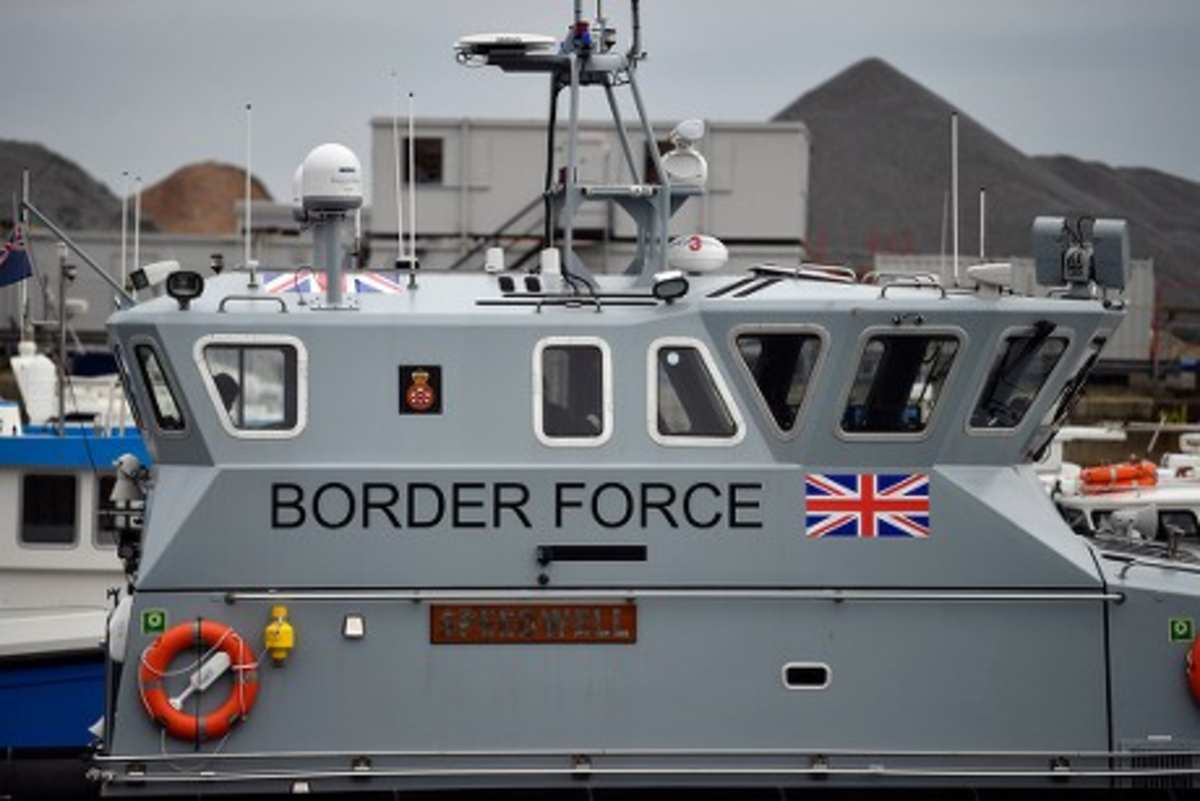
An artificial intelligence age estimation tool designed to identify adult migrants is set to be implemented at the UK’s borders in 2027.
The UK government has awarded a contract to Akhter Computers Ltd, [1] a products and services based in Harlow, to develop and test [2] an AI facial recognition tool designed to estimate the ages of asylum seekers at the border. The contract, valued at £322,000 over three years, includes plans for further testing before a projected rollout in 2027. According to the Home Office, speaking to reporters they claims it would identify adults “attempting to game the system,” following initial tests that demonstrated “promising performance and accuracy.”
In response, Human Rights Watch, [3] an organisation that investigates and reports on abuses, has called on the UK government to abandon the initiative, labeling it “unproven technology.” Additionally, Home Office data indicates there were 111,084 asylum claims in the year ending June 2025, representing a 14% increase, while in the year ending March 2026, over 6,400 individuals claiming to be children underwent age assessments, revealing that 43% were found to be adults.
On July, 2025, the UK government of the use of AI face-scanning technology to assess the age of asylum seekers raised concerns about the potential risks to children seeking refuge. Angela Eagle, [4] who was the Minister for Border Security and Asylum, said [5] to the Houser of Commons, “Accurately assessing the age of individuals is an incredibly complex and difficult task, and the Home Office has spent a number of years analysing which scientific and technological methods would best assist the current process, including looking at the role that artificial intelligence technology can play. Since coming into office, this Government have commissioned further tests and analysis to determine the most promising methods to pursue further,” said Eagel.
“Based on this work, we have concluded that the most cost-effective option to pursue is likely to be facial age estimation, whereby AI technology trained on millions of images where an individual’s age is verifiable is able to produce an age estimate with a known degree of accuracy for an individual whose age is unknown or disputed.” Companies in the UK that evaluated their technology in select supermarkets, pubs, and online platforms [6] developed systems to predict whether an individual appears to be under 25 years old rather than 18.
In a column [7] titled UK Plans AI Experiment on Children Seeking Asylum, researchers [8] Hye Jung Han and [9] Anna Bacciarelli said in 2025, “AI face scans were never designed for children seeking asylum, and risk producing disastrous, life-changing errors. Algorithms identify patterns in the distance between nostrils and the texture of skin, they cannot account for children who have aged prematurely from trauma and violence. They cannot grasp how malnutrition, dehydration, sleep deprivation, and exposure to salt water during a dangerous sea crossing might profoundly alter a child’s face,” said the researchers. “These AI systems’ inability to explain or reproduce results further erodes a child’s right to redress and remedy following wrongful assessment, while creating new privacy and non-discrimination risks. The UK government has repeatedly and illegally subjected children seeking asylum to abusive conditions by wrongly classifying them as adults.”
In 2023, The High Court determined that [10] the Home Office's practice of routinely placing unaccompanied child asylum seekers in hotels was unlawful. The legal challenge was initiated by [11] the charity Every Child Protected Against Trafficking, which argued that the conditions under which these children are housed do not meet necessary standards. Justice Martin Chamberlain, [12] a court judge said, “It cannot be used systematically or routinely in circumstances where it is intended, or functions in practice, as a substitute for local authority care. From December 2021 at the latest, the practice of accommodating children in hotels, outside local authority care, was both systematic and routine and had become an established part of the procedure for dealing with unaccompanied asylum-seeking children. From that point on, the home secretary’s provision of hotel accommodation for unaccompanied asylum-seeking children exceeded the proper limits of her powers and was unlawful.”