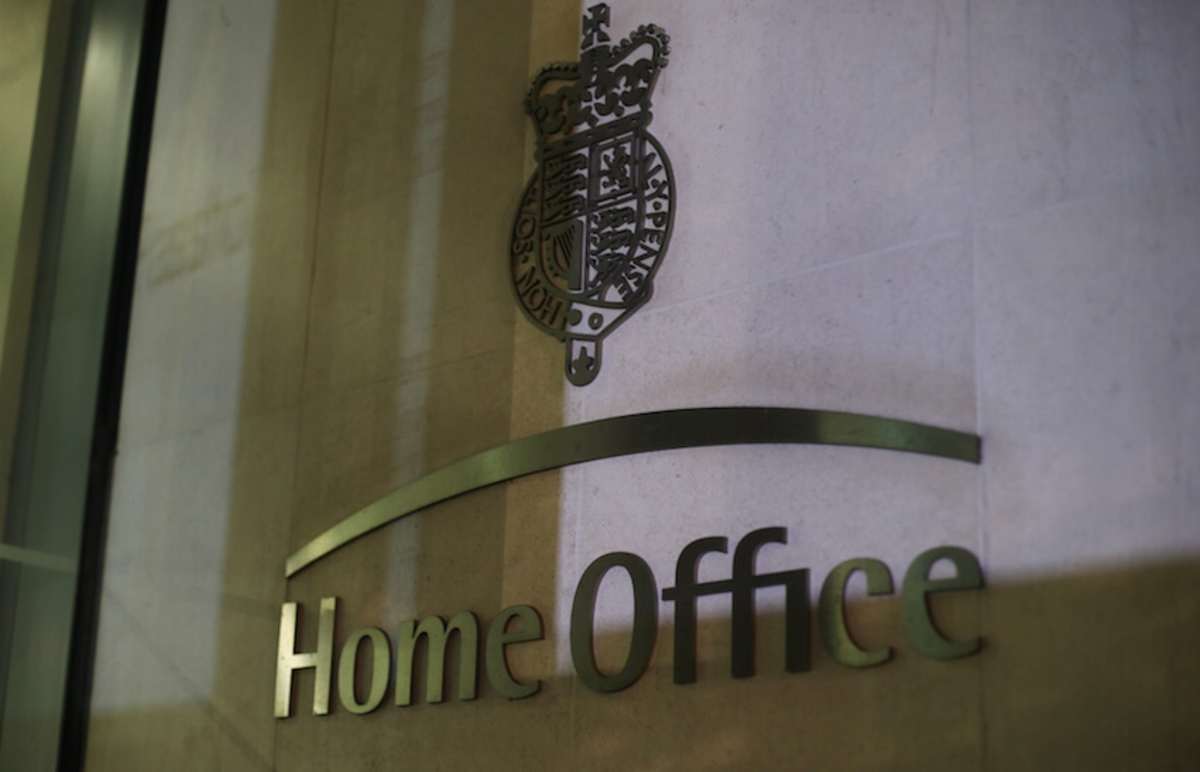
The Human Rights Network has joined the increasing number of advocacy organisations in opposing the Home Office's plans to implement facial age estimation for determining the age of asylum seeking children which is fueling fears of digital surveillance and biometric data collection.
The [1] charity Human Rights Network has assisted hundreds of minors who the state has incorrectly classified as adults. In April, the Human Rights Network revealed that the Home Office often detains individuals labeled as age-disputed children alongside adults. Of the 76 detainees whose ages were in dispute, Social Services [2] had either reassessed or were in the process of reassessing 26 of them as children. Maddie Harris [3] is director and founder of The Human For Rights Network said, “Many of these children are survivors of torture and trafficking and are experiencing acute declines in their mental health as a result of what is often months of detention in the UK. These children are additionally prejudiced from accessing the care and support they are entitled to as children as well as adequate, social worker-led local authority age assessments. No child should be detained, with those who remain in detention immediately released to allow them to recover and to ensure they are able to access age assessments conducted in the community where required.”
Subsequently, the Helen Bamber Foundation reported that [4] the Home Office inaccurately classified 755 children as adults in 2025 alone. The government has proposed the use of artificial intelligence and facial recognition technologies for age assessment. However, these proposals do not directly address the underlying concerns unless adequate safeguards are established. Research indicates that AI can exhibit lower accuracy and greater bias than human decision-making in age evaluation, often showing similar patterns of error. Furthermore, AI is unable to consider factors that can significantly affect a young person's appearance, particularly after experiencing conflict, persecution, and perilous journeys, including trauma, malnutrition, and exhaustion.
Kamena Dorling who [5] is the Director of Policy at the Helen Bamber Foundation, said, “Despite the mounting evidence of the profound harm being caused, the Home Office continues its practice of wrongly assessing children who come to the UK alone to seek protection, as adults. The latest figures should that in the second half of 2025, at least 326 child refugees were incorrectly treated as adults after a visual assessment of age at the border. The final number could be as high as 700 in just six months. These are children who end up placed with strangers in adult accommodation, in immigration detention and even in adult prisons.”
On 1 June 2026, it was reported that [6] the Home Office revealed plans to implement AI facial age estimation technology in cases where the age of asylum seekers is contested. This software was created by [7] the German facial recognition firm Cognitec Systems. Kamena Dorling, who [8] is the co-chair of the Refugee and Migrant Children’s Consortium said, “The government’s proposals are deeply concerning. AI cannot account for the factors that can significantly affect a young person’s appearance after fleeing conflict and persecution and undertaking dangerous journeys, including trauma, malnutrition, and exhaustion. Existing evidence also shows that AI faces the same problems with bias and inaccuracy as human decision-making, with similar patterns of errors.” Facial age estimation is an artificial intelligence technology that examines photographs of faces to estimate an individual's age. Utilizing computer vision, it identifies patterns in facial characteristics such as skin texture and lines. This process is distinct from facial recognition, as it focuses on age estimation rather than the identification of individuals.
Alex Norris, who [9] was the minister for border security and asylum said, “For too long, adult migrants making false age claims have exploited the system and diverted vital support away from children at risk. That is why we are rolling out AI technology to put a stop to this, ensuring those who game the system are identified, detained and removed without delay, and those who deserve support and protection are given it.” The recent emphasis on artificial intelligence is a central aspect of the Labour Party's extensive initiative to integrate the technology into various areas of public life, encompassing [10] policing and the judicial system. The push for artificial intelligence has resulted in significant public funding benefiting executives in the technology sector.
Notably, Palantir [11] a software company specialising in data integration and artificial intelligence for government and commercial clients, has ties to controversial activities, the software company [12] holds more than £500 million in public contracts, which range from the NHS to law enforcement agencies. Amnesty International also [13] released a report stating that Palantir has been supplying AI products and services to the Israeli military and intelligence services, which are linked to Israel’s military activities in Gaza. In a document from the Home Office [14] titled Facial age estimation: Using AI to support initial age decisions, they claim facial age estimation offers valuable support to officials tasked with making critical decisions, “Asylum seekers frequently arrive at the UK border with no official identity documents and so it can sometimes be difficult to know for sure which are children. If there is reason to doubt someone is the age they say they are, immigration officers must make an initial age decision to determine whether to treat them as a child or an adult. This decision is important as it ensures children are treated appropriately and can access the right services and support. It is also important for the proper safeguarding of children, with the potential to wrongly place a young person in adult environments or to allow an adult to mix with children, such as in a care or school setting,” said the Home Office.
According [15] to Electronic Frontier Foundation facial age estimation systems depend [16] on algorithms or AI technologies that exhibit significant error rates, especially in estimating age based on race and gender. Additionally, some programmes connect users to financial databases or digital ID systems, which may exacerbate discrimination and lead to the exclusion of certain individuals. “These mandates create irresistible targets for hackers and governments alike, normalizing constant ID checks across the web and defying long-standing internet safety norms in the process. No one should have to sacrifice their privacy or anonymity in order to exercise their free speech rights online,” said the Electronic Frontier Foundation.
- https://www.humansforrights.org/
- https://www.theguardian.com/uk-news/2026/apr/05/uk-detained-age-disputed-migrant-children-one-in-one-out-scheme
- https://www.independent.co.uk/author/maddie-harris
- https://www.helenbamber.org/resources/latest-news/first-ever-home-office-data-reveals-hundreds-child-refugees-wrongly-treated
- https://www.helenbamber.org/who-we-are/our-team
- https://www.theguardian.com/uk-news/2026/jun/01/charities-decry-uk-plan-to-use-ai-to-assess-age-of-young-asylum-seekers
- https://www.cognitec.com/
- https://refugeechildrensconsortium.org.uk/members-information/
- https://www.gov.uk/government/ministers/minister-of-state--205
- https://www.gov.uk/government/speeches/we-are-calling-time-on-the-justice-system-of-the-past
- https://www.palantir.com/
- https://www.medact.org/2026/resources/briefings/briefing-palantir-fdp/
- https://www.amnesty.org/en/latest/news/2025/09/global-political-economy-enabling-israels-genocide-occupation-apartheid/
- https://www.gov.uk/government/publications/facial-age-estimation/facial-age-estimation-using-ai-to-support-initial-age-decisions-a-guide-accessible
- https://www.eff.org/pages/age-verification-systems-are-surveillance-systems
- https://nvlpubs.nist.gov/nistpubs/ir/2024/NIST.IR.8525.pdf