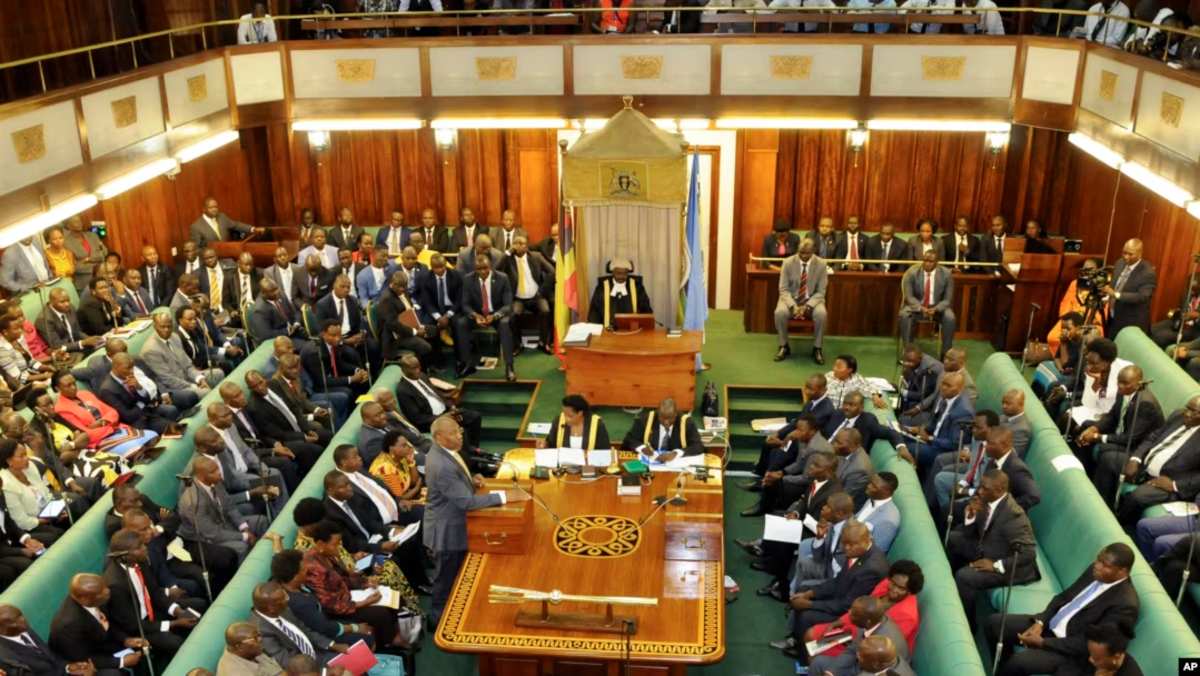
The government in east African nation Uganda has introduced fingerprint scanners to connect taxpayer records with national identification numbers, amid rising concerns regarding enrollment gaps and access issues.
Uganda is proceeding with plans to utilize [1] the National Identification Number or NIN as the tax identifier for individuals, linking the national digital ID system with tax administration. However, this reform places significant pressure [2] on the National Identification and Registration Authority or NIRA, which is currently facing challenges such as staffing shortages, unissued identity cards, and issues related to digital verification. The Uganda Revenue Authority announced that the upcoming reform aims to remove the necessity for citizens to hold a separate 10-digit Tax Identification Number. This change is expected to streamline the processes of tax registration and verification. In the revised system, individuals will utilize their National Identification Number or NIN, while non-individual entities will refer to registration numbers provided by the Uganda Registration Services Bureau.
The Uganda Revenue Authority has revealed that it has obtained 80 biometric fingerprint scanners to facilitate the shift from Tax Identification Numbers or TIN to National Identification Numbers for individual taxpayers. The Monitor reports [3] that these scanners have already been installed in specific locations within Kampala and Wakiso. The devices are designed to assist Uganda Revenue Authority officials in verifying taxpayers and connecting their national ID information to their current tax records. The rollout of biometric authentication follows the Cabinet's approval of the implementation strategy for the reform in September. URA reports that Uganda has approximately 5.4 million individual taxpayers, though only around 3.3 million are considered active. Officials believe that substituting Tax Identification Numbers with National Identification Numbers could [4] enhance the efficiency of the process and help identify more potential taxpayers. However, despite assurances that this transition would simplify taxation procedures, the initiative has encountered criticism.
Joel Ssenyonyi, who [5] is Leader of the Opposition raised concerns about the system's preparedness to support Ugandans who are not registered with the National Identification and Registration Authority. “About 10.4 million Ugandans are not registered by NIRA, so there is a lacuna during the migration because they do not exist in the system. How will you address that? 60% of the people on the tax register are inactive, so the claim that tax inflows will increase is not necessarily true. We would want to know the plans around those who are inactive,” said Ssenyonyi. In [6] a report released in October 2026, Parliament Watch identified challenges encountered by the National Identification and Registration Authority. Rosemary Kisembo who [7] is the Executive Director ofNIRA, addressed a parliamentary committee, expressing concerns over staff shortages and operational constraints that are hindering the expansion of the national ID programme. In recent years, Uganda has aimed to modernize and expand its national identity infrastructure. In February 2026 an official from NIRA stated that the migration of ID records, along with new registrations and updates, has increased the total number of ID enrollments in Uganda's population database to over 35 million, [8] according to New Vision.
Chris Baryomunsi, who [9] is the Minister of Health, announced that the National Identification and Registration Authority [10] is currently engaged in a synchronization process with the Uganda Communications Commission aimed at authenticating the new national identification cards. Baryomunsi, who has previously held the position of Minister for ICT and National Guidance, recognized that NIRA has yet to fully harmonize the newly issued national IDs, but assured that the process is ongoing. His comments were prompted by a matter of national importance raised by Paul Mwiru during the plenary session in which Mwiru expressed concerns regarding the inability to use his national ID for transactions. “When the bank froze my account for an update, I presented my newly acquired national ID and they told me it does not work and that I have to go to NIRA to get a letter to verify it. I found several other people in the bank who also had to verify their IDs.”
Uganda's reforms are aligning with initiatives seen in other countries in Africa, despite variations in approach. For instance, Ghana transitioned [11] from individual Tax Identification Numbers to the Ghana Card Personal Identification Number on April 1, 2021. Nonetheless, companies and organizations still rely on tax identifiers issued by the Ghana Revenue Authority. Similarly, Nigeria introduced a new Tax ID framework in January, where individual Tax IDs are derived from the National Identification Number, while businesses utilize their Corporate Affairs Commission registration details. It is worth noting that Nigeria maintains a separate Tax ID, as it does not utilize the NIN as the tax identifier.
In January, Nigeria implemented a new Tax ID framework whereby individual Tax IDs are linked to the National Identification Number, while businesses utilize information from their Corporate Affairs Commission registration. Despite this integration, Nigeria continues to maintain a separate Tax ID, not adopting the NIN as the primary tax identifier. This approach has prompted concerns regarding financial inclusion in the country. Daramola Omoyele who [12] is an economist and data analyst, “The irony is that Nigeria already has the building blocks of a single digital identity. The NIN was designed to be the master ID, while the BVN has captured biometric and financial data for millions of bank customers. Instead of harmonising these, the new TIN law introduces another obstacle at a time when about 38 million adults remain unbanked, Nigeria must stop building silos and start building systems that talk to each other. One number is enough.
Daramola Omoyele argued that if the National Identification Number is established as the central identity and effectively integrated with tax, banking, telecommunications, and other services, citizens would benefit from easier, more affordable, and more reliable access to government programmes. “The new TIN law is well-intentioned, but it risks worsening an already messy identification system. Nigeria should prioritise data harmonisation over multiplication. As a nation, we don’t need five or six different numbers to prove who we are. We need just one and we already have it in the NIN.”
- https://dgacommunity.org/2026/10/08/uganda-moves-to-single-national-identifier-for-tax-and-government-services/
- https://nira.go.ug/home
- https://www.monitor.co.ug/uganda/business/finance/ura-acquires-biometric-scanners-to-fast-track-tin-to-nin-transition-5639260
- https://dailyexpress.co.ug/2026/10/17/mps-question-shs420b-revenue-projection-from-nin-tax-reform/
- https://ugleader.com/leader/1159/ssenyonyi-joel-besekezi
- https://www.parliamentwatch.ug/news/nin-becomes-tax-key-as-nira-battles-id-backlog
- https://id4africa.com/ambassador/rosemary-kisembo/
- https://www.newvision.co.ug/category/news/35-million-ugandans-registered-in-national-id-NV_227736_022026
- https://health.go.ug/leadership/hon-dr-chris-baryomunsi
- https://www.parliament.go.ug/news/4689/new-ids-be-activated-soon-baryomunsi
- https://gra.gov.gh/commencement-of-the-use-of-ghana-card-personal-identification-number-as-taxpayer-identification-number/
- https://omoyelejd.co.uk/about