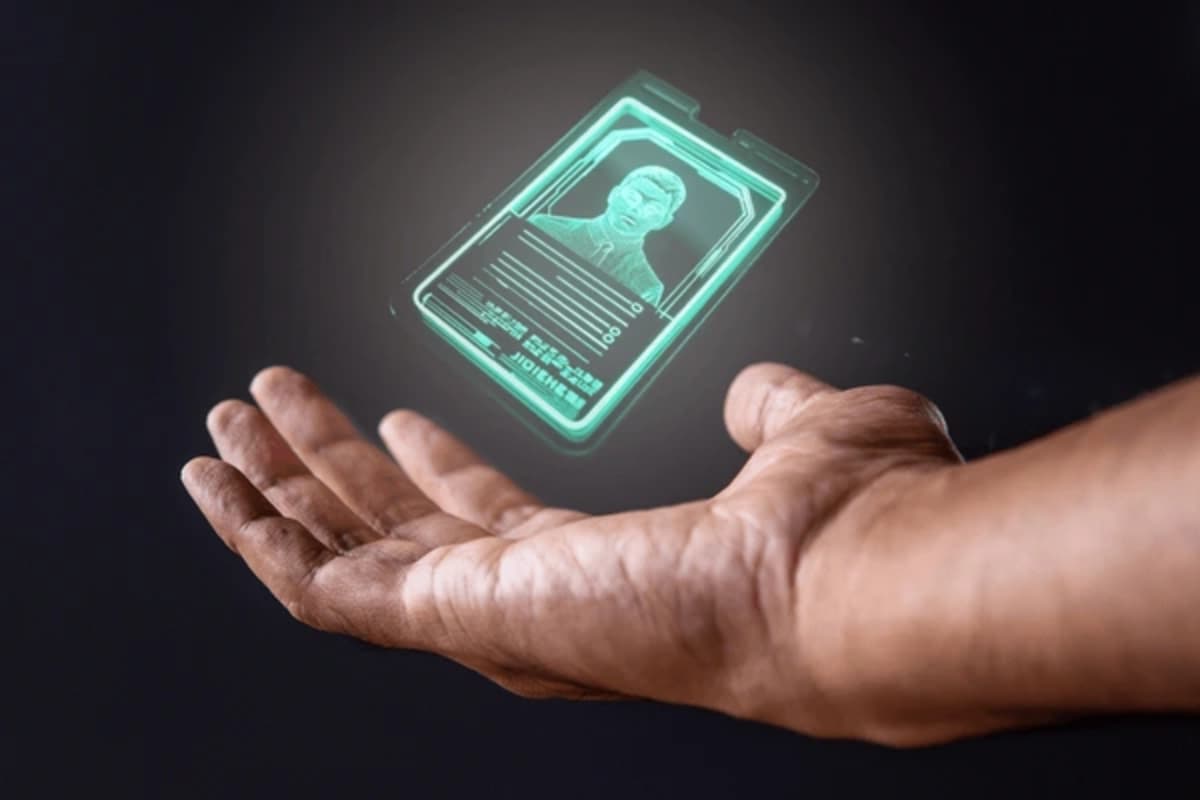
Thousands of demonstrators gathered in central London on Saturday afternoon to express their opposition to proposed digital ID plans.
Thousands of protesters filled [1] the streets of central London to express their opposition to the government's proposed implementation of digital ID cards. Under strict police oversight, demonstrators chanted slogans and carried banners during their march from Marble Arch to Whitehall. In September, Sir Keir Starmer revealed [2] plans for a mandatory digital ID system to be established by 2029 for individuals seeking employment in the UK, as part of initiatives aimed at reducing illegal migration. At [3] the Global Progressive Action Conference in London, Keir Starmer said, “It is not compassionate left-wing politics to rely on labour that exploits foreign workers and undercuts fair wages. The simple fact is that every nation needs to have control over its borders. We do need to know who is in our country.” However, Sir David Davis, who was [4] Secretary of State for Exiting the European Union said [5] on the digital ID scheme, “While digital IDs and ID cards sound like modern and efficient solutions to problems like illegal immigration, such claims are misleading at best. The systems involved are profoundly dangerous to the privacy and fundamental freedoms of the British people.”
A poll released [6] in October indicated that support for digital ID cards has declined, dropping from 35% in early summer to -14% following Starmer’s announcement, according to research conducted by More in Common. The UK government [7] claims that digital ID cards will be implemented to verify an individual's right to live and work in the UK, with mandatory requirements for all job seekers. Authorities express concerns that the accessibility of illegal employment opportunities within the UK’s shadow economy contributes to the ongoing issue of individuals undertaking perilous journeys across the Channel.
A petition on [8] the Parliament website has surpassed the 10,000 signatures, which compels a response from the Department for Science, Innovation and Technology. The petition, initiated by Sol Bowker, calls for the UK government to conduct a referendum regarding any proposals for the introduction of identity cards, including the suggested BritCard. “We oppose the implementation of a mandatory national identity card system, as we believe it could risk turning personal identification into a tool for state control. We urge the government and Parliament to continue to allow freedom of speech and freedom of movement which are protected under the Human Rights Act 1998, which incorporates rights from the European Convention on Human Rights into domestic law. We believe the BritCard could contravene this,” stated the petition. “There will be other ways for people to join a national conversation, including through a forthcoming consultation. The government will not introduce a scheme called BritCard. However, the Prime Minister has recently announced we are working on a national, UK-wide digital identity scheme. It will not be a card, but a digital pass which will be fit for the needs of a modern UK, and will be fully compliant with our international legal and human rights obligations.”
Meanwhile, the UK's Armed Forces veterans will be used to test and refine the government’s divisive digital ID scheme. The Department for Science, Innovation and Technology [9] announced the launch of a digital version of the Veteran Card, designed to facilitate quicker access to essential services and discounts via smartphones. This digital card can be utilized for accessing housing and mental health support, as well as obtaining discounts on museum entry and rail fares. Louise Sandher-Jones [10] who is the Minister for Veterans and People said, “Our veterans have given so much in service to our country, and we must ensure they can easily access the support and recognition they are entitled to and deserve. This digital Veteran Card removes barriers and puts convenience back in their hands whether they’re registering with a new GP, seeking housing support, or simply getting a discount at their local museum. With 1.8 million veterans across the UK now able to benefit from this innovation, we’re making good on our commitment to modernise services for our veteran community.”