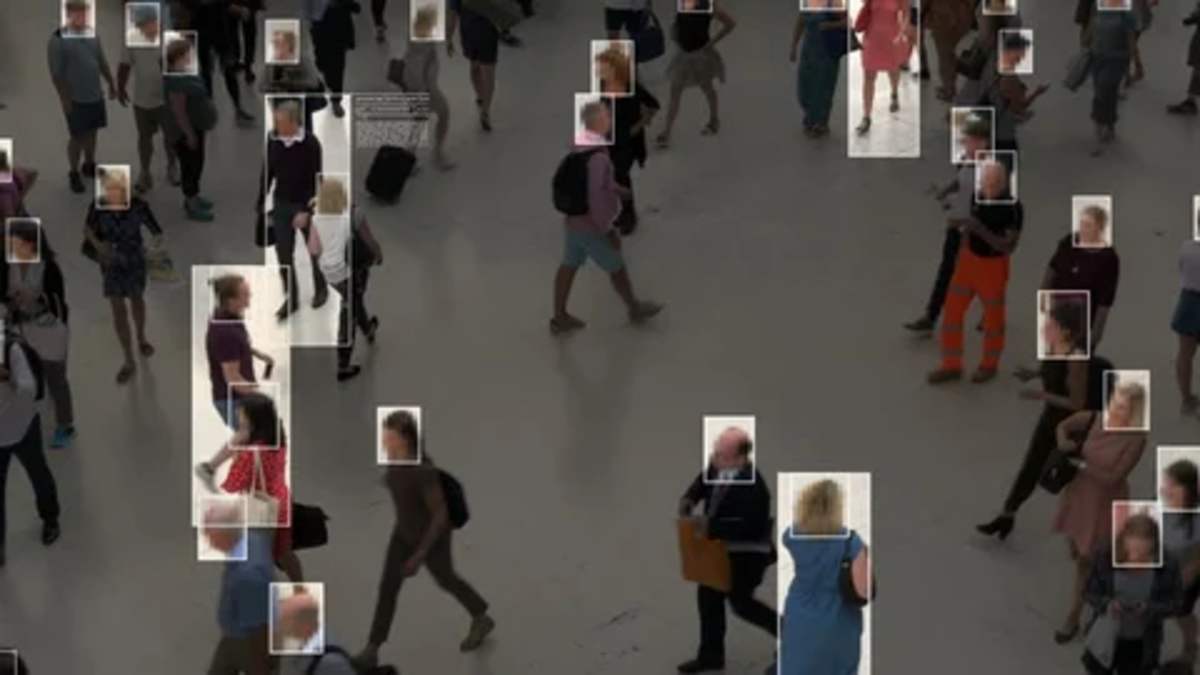
Hampshire and Isle of Wight Constabulary has announced they will to deploy facial recognition vans before Christmas.
Hampshire and Isle of Wight Constabulary [1] is among the recent law enforcement agencies to implement live facial recognition technology for identifying suspects, monitoring offenders violating court orders, and locating missing individuals. The force claims that the technology demonstrates “extremely low levels of misidentification,” despite [2] criticism from civil liberties groups over the UK governments plans to increase police use of facial recognition. The initial full deployment [3] is scheduled to take place in Southampton on 18 December.
They have stated that deployments will be announced seven days in advance, similar to the pilot programme. The Hampshire and Isle of Wight Constabulary have also stated that the racial recognition technology does not capture photographs of individuals passing by. Instead, it generates a biometric facial template from faces observed on the live camera feed and compares these with the biometric templates of images on the watch list. Images on the watch list and their biometric templates will then be deleted within 24 hours after each deployment day, while CCTV footage will be deleted within 31 days, consistent with standard public camera practices.
Hampshire and Isle of Wight Constabulary also released a Policy Document for overt deployment of LFR [4] titled Policy 3804: Overt Deployment of Live Facial Recognition Technology, this would include roles and responsibilities, policies and procedures. “Live Facial Recognition assists Hampshire & Isle of Wight Constabulary as a precision crime-fighting tactic to locate people who are wanted by order of a court, shown as an outstanding suspect for criminal offences or otherwise need to be legitimately located by the police,” said the document.
Robert France who [5] is the Assistant Chief Constable for the Joint Operations Unit said, “We are very excited to get these vans out into our communities where they can really make a difference when it comes to fighting crime. We have seen how successful the use of this technology has been for other forces across the country when it comes to arresting outstanding suspects, so we cannot wait to get them deployed and supporting our officers on their patrols. It was clear from our pilot in September last year, just what an effective tool it can be for our teams, not just when it comes to tracking down high priority suspects but also to help reduce crime in the area more generally.”
Donna Jones who [6] is the Police and Crime Commissioner for Hampshire and the Isle of Wight, “This technology is ground-breaking. It's helping lead to the faster detention of suspects which is freeing up police time to fight crime, patrol our streets and respond to emergencies. This is a forward-thinking approach for modern policing and is another vital step in further protecting our communities.” This announced comes after The Home Office [7] announced funding for 10 additional LFR vans in August, which will be used externally, including for police in Hampshire and the Thames Valley in collaboration.
In conjunction with the deployment of the 10 vans, the government will also seek input on the appropriate use of technology and the necessary safeguards and oversight to ensure transparency and public trust. This input will assist the government in developing a new legal framework for its application. Additionally, [8] they must adhere to the College of Policing’s guidance regarding the use of this technology, which involves comparing live feed facial images only against police watch lists to identify matches, and conform to the surveillance camera code of practice.
Yvette Cooper, who [9] is the Foreign Secretary said, “Neighbourhood policing has been decimated over the last 15 years, but through our Plan for Change we are turning the corner, starting with town and city centres. Within the next year, we will have 3,000 new neighbourhood officers and PCSOs in place, which is a big shift. We also want them to have more powers to tackle off-road bikes, shop theft, street theft and other crimes that have blighted some of our town and city centres, so everyone can feel safe in their own town.”