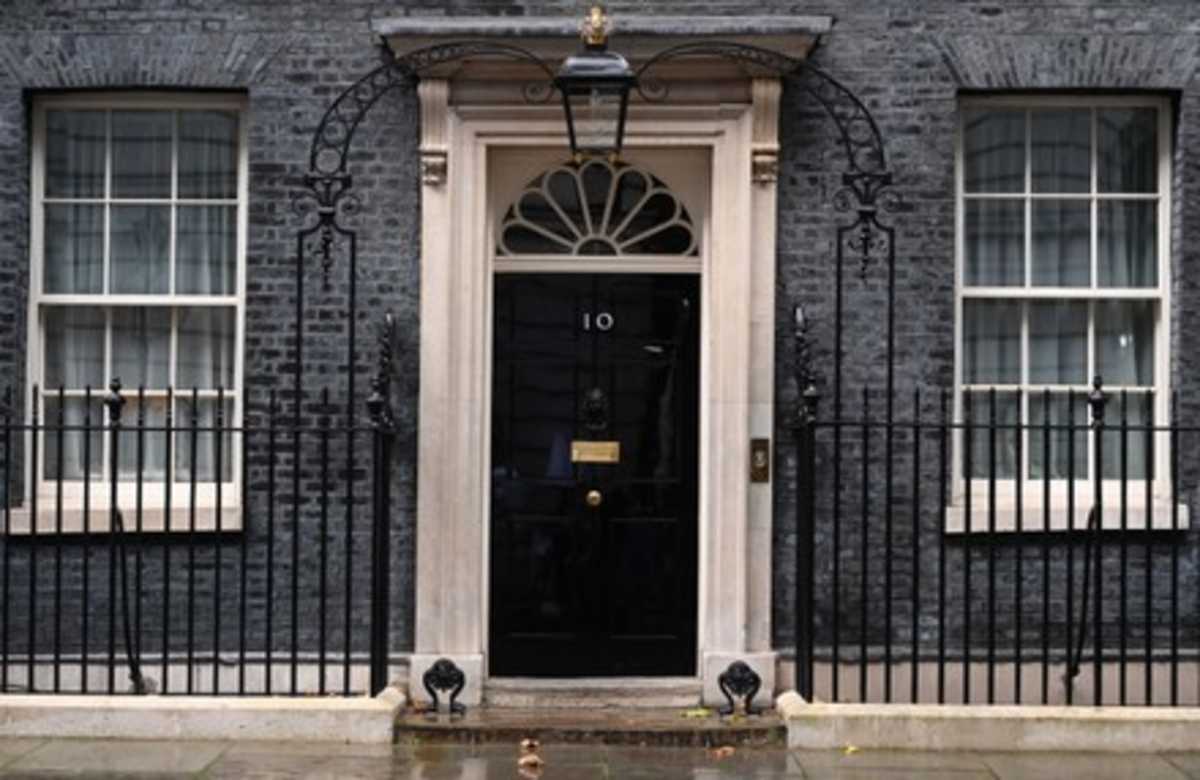
The Prime Minister will make cuts to other departments in the UK government to finance the digital ID scheme, meanwhile the Starmer announces that the legislation will not be mandatory for workers in a surprise U-turn.
The UK government under Prime Minister Keir Starmer faces the challenge of addressing the historical complexities associated [1] with Tony Blair’s early 2000s initiative to implement a national ID card. Government departments [2] are reportedly seeking savings or budget cuts to finance the digital ID initiative, this has contributed to a sense of unease among many British citizens. Concerns persist regarding the potential for the ID scheme, promoted as a means to combat undocumented migration, to result in widespread government surveillance and increased state control. The UK government appointed Josh Simons, [3] a Labour MP for Makerfield and a prominent advocate for the digital ID initiative, as [4] the minister of digital reform responsible for overseeing public consultation. Simons is likely to receive significant feedback, especially as further details regarding specific costs and cuts emerge.
Josh Simons said after his appointment, “I want government to have the tools to move at the same pace. Whether it is applying for a new passport, accessing support for your children or proving who you are for a job, the state should be working as hard as possible to make these things easy for you, not making you do the hard work.” Kier Starmer said [5] in a ministerial statement said, “I am making this statement to bring to the House’s attention the following Machinery of Government update. In order to deliver this cross-government priority, the Cabinet Office will have overall responsibility of the new digital identity scheme, including policy development, legislation and strategic oversight. The Cabinet Office will work alongside the Department for Science, Innovation and Technology, who will be responsible for the technical design, build and delivery; and other departments. This will be effective immediately.”
The Telegraph reports [6] that Liberal Democrats have expressed strong criticism of Starmer’s budget proposal, labeling it as “disgraceful.” This backlash may also sway several Labour MPs to oppose the initiative, aligning them with a coalition that includes politicians, civil liberties and digital privacy organizations, as well as stakeholders from the private biometric and digital ID sector in the UK. This comes before the UK government the digital ID scheme [7] would no longer be mandatory after backlash by opposition leaders and members of the general public, this would allowing the potential for individuals to utilize alternative forms of identification to demonstrate their right to work.
Mike Wood, who is [8] a Shadow Cabinet Office minister said, “What was sold as a tough measure to tackle illegal working is now set to become yet another costly, ill-thought-out experiment abandoned at the first sign of pressure from Labour’s backbenches.” Lisa Smart, who [9] is the Cabinet Office spokesperson for Liberal Democrats also said, “No 10 must be bulk ordering motion sickness tablets at this rate to cope with all their U-turns. It was clear right from the start this was a proposal doomed to failure, that would have cost obscene amounts of taxpayers money to deliver absolutely nothing. The government now needs to confirm that the billions of pounds earmarked for their mandatory digital ID scheme will be spent on the NHS and frontline policing instead.”
A survey conducted [10] by Checkout.com revealed that [11] a majority of UK consumers lack trust in digital identification systems. The findings indicate that British individuals are among the least trusting globally when it comes to this technology. Consumers in the UK voiced specific concerns regarding [12] the implementation of facial recognition technology in digital identification, despite the Tony Blair Institute describing it as a no-brainer. Rory O’Neill, who [13] is the CMO at Checkout.com said. “Global commerce requires trust in order to function. Just as we worked across the ecosystem to build confidence in online payments and verify the identity of shoppers when ecommerce first emerged, we must now apply the same focus to digital identity. For the adoption of digital commerce, and in time agentic commerce, to continue to flourish, the industry and policymakers must prioritise how digital identity is managed. If trust isn’t earned now, the digital divide will only deepen.”
Nevertheless, the Tony Blair Institute which has campaigned for digital ID’s has continued to back the scheme, Ryan Wain who [14] is the Senior Director, Policy & Politics at the Tony Blair Institute said, “Removing mandatory digital ID from right-to-work checks is a change in approach, not a change in direction. Digital identity remains essential if we want public services that work in the way people now expect, with less friction, fewer forms and services that actually join up. People who can pay for more personalised and preventative services already get them. Government should be aiming to make that the standard, not the exception. If digital ID makes everyday interactions with the state easier, faster and more personalised, people will choose it. Getting the design and rollout right is how you build public trust, and it’s the foundation for genuinely modernising public services.”