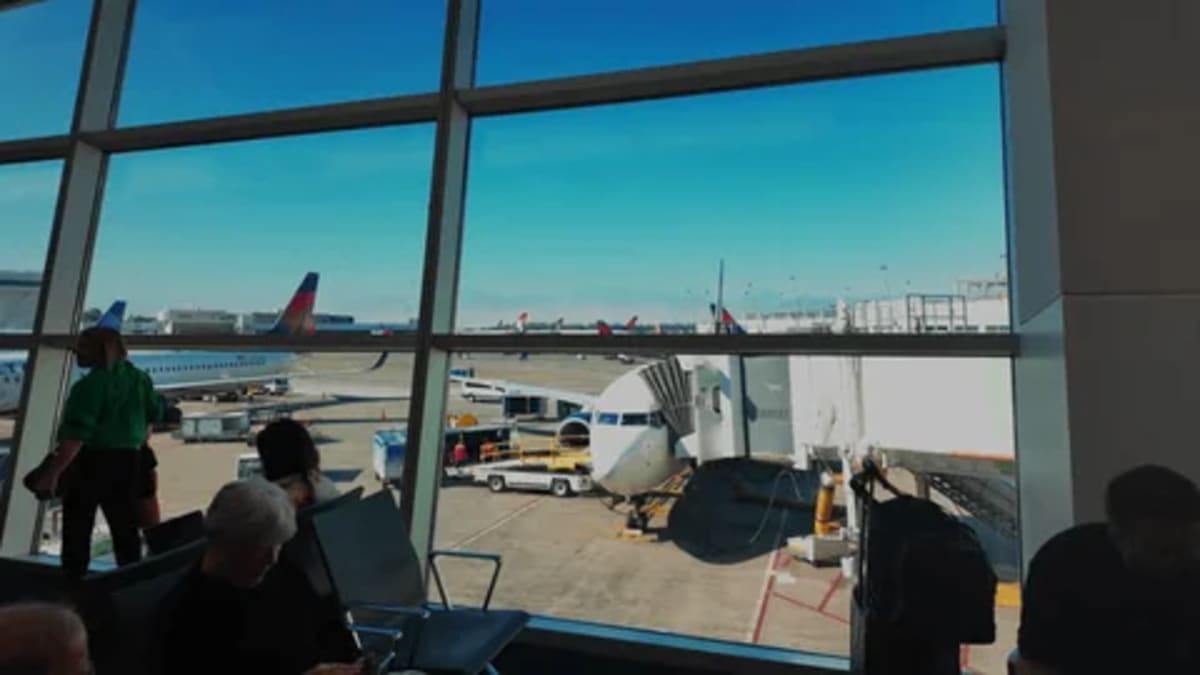
A new policy is set to be implemented at US airports, which will collect facial recognition data from non-citizens entering and exiting the country.
[1] The Department of Homeland Security or DHS has announced a new measure aimed at reducing visa fraud, identifying criminals, detecting overstays, and preventing illegal re-entries. Under this initiative, visitors arriving in and departing from the United States will have their facial biometric data collected by [2] the US Customs and Border Protection. The recent policy change has eliminated prior exemptions, including those for diplomats and the majority of Canadian visitors. According to Customs and Border Protection, biometric facial comparison technology [3] is currently employed to process travellers arriving in the United States at 238 airports.
The airport policy was initially revealed on November 20, the new regulation emphasizes facial recognition, border officers will maintain the collection of fingerprints from arriving travellers. Each inspection booth at entry points is equipped with a fingerprint reader. Diane J. Sabatino, who [4] is the acting executive assistant commissioner of CBP's field operations office said in [5] a press release, “This final rule marks a major milestone towards our efforts to successfully implement the Biometric Entry/Exit mandate and strengthen the security of the United States, “With increased funding to support this critical mission, we will continue to expand facial biometrics and advanced technology for identity verification to further secure and innovate the entry/exit process at air, land, and sea.”
However, Yvette D. Clarke [6] a Representative for New York submitted [7] a public comment letter to [8] Secretary of Homeland Security Kristi Noem stating the decision has sparked concerns [9] about privacy, data security, and the potential for discriminatory or unauthorized surveillance. The letter was endorsed by 49 members of Congress. “As Members of Congress committed to protecting civil rights, immigrant communities, and responsible technology governance, we write to express significant concern regarding the Department of Homeland Security’s proposal to expand biometric data collection and reuse across immigration and naturalization processes. The proposed rule raises serious questions about privacy, data security, and the potential for discriminatory or unauthorized surveillance,” said the letter.
Jeramie Scott, [10] who is a lawyer with the Electronic Privacy Information Centre has also expressed concern that [11] the government may look to broaden its application of facial recognition technology. “The ease of implementation is what, in part, makes facial recognition such a dangerous technology to implement at such a broad scale,” said Scott. The agency has received approval to expand the technology to additional locations. Participation in the facial biometrics programme is not mandatory for US citizens, who have the option to opt in upon entering or leaving the country.
Those who choose not to participate are encouraged to inform a Customs and Border Protection officer or an airline representative, which will allow them to proceed with a manual passport check. According to the Department of Homeland Security photos of US citizens are deleted within 12 hours, whereas images of noncitizens are kept in the agency's biometric identity management system for up to 75 years. Facial comparison technology has also been identified as the “best available method for biometric verification,” characterized as “accurate, unobtrusive, and efficient,” according to a final notice [12] published in the Federal Register.
On December 22, 2025 the Transportation Security Administration or TSA reported that over 44 million travellers [13] are anticipated to pass through the nation's airports from December 19 to January 4. The agency expects that the busiest days will occur soon after the enhancement of the biometric entry-exit system. On December 28, about 2.9 million travellers are projected to be on the move, with significant travel also expected the day prior. Adam Stahl who [14] is the TSA Senior Official Performing the Duties of the Deputy Administration said, “TSA expects 2025 to be another record setter following major improvements this year to make airport security more seamless and secure. DHS Secretary Noem implemented REAL ID, launched family and military lanes, and ended the shoes off requirement."