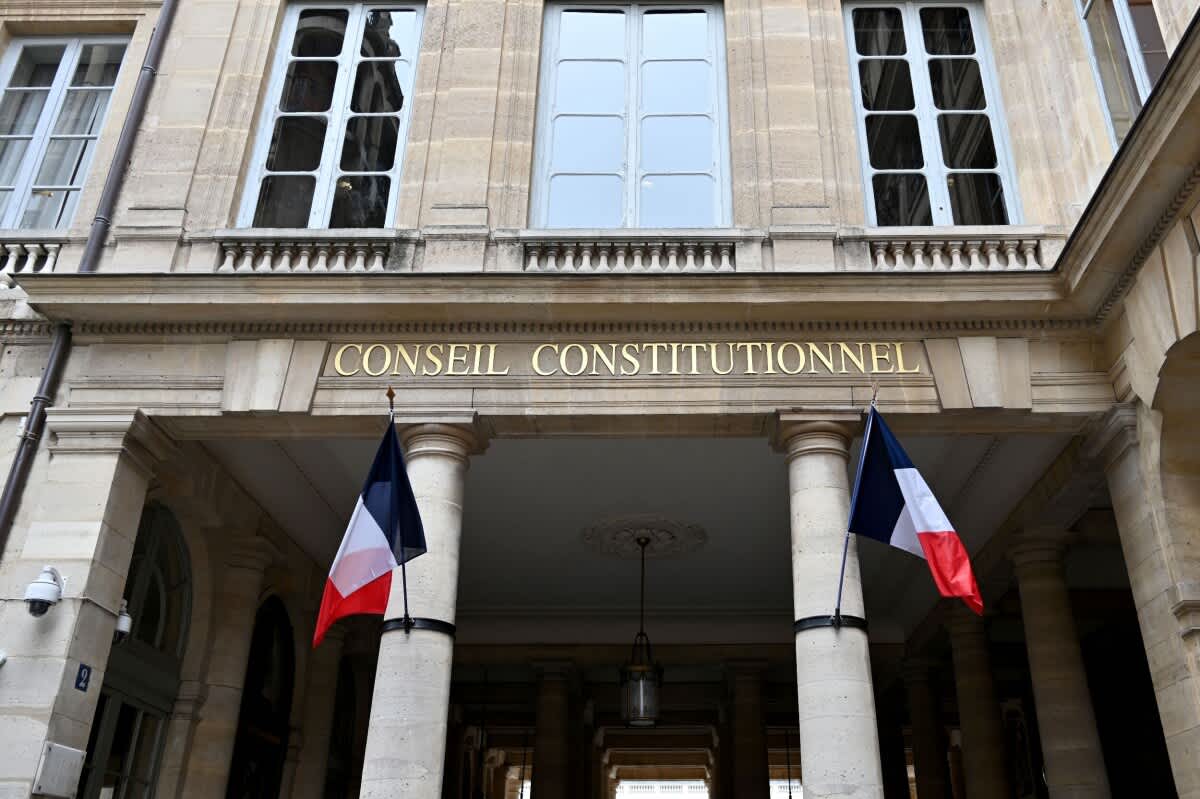
France's highest court has struck down a bill that sought to prohibit social media access for individuals under the age of 15.
A court [1] has ruled that the social media digital ID law violates freedom of expression. This decision poses a significant setback for President Emmanuel Macron, who advocated for the legislation and sought to inspire similar initiatives in other countries. However, it is seen as a victory for privacy and free speech. “By prohibiting minors under the age of 15 from accessing certain online services, the law inherently requires every person, even an adult, to prove their age before accessing them,” said the Constitutional Council. “The Council holds that the contested provisions, on the one hand, disproportionately infringe upon the freedom of expression and communication and, on the other, fail to provide the legal safeguards necessary to ensure the right to respect for private life.”
A proposed bill aimed [2] at prohibiting individuals under the age of 15 from creating social media accounts has sparked debate. If enacted, the legislation would have taken effect on September 1. Existing accounts created by users before that date would have needed to be deactivated within four months. Furthermore, social media platforms would have been required to implement age verification systems, raising concerns about privacy implications. A commission made up of seven deputies and seven senators dedicated around two hours to reconcile two different versions of [3] a bill introduced by Renaissance deputy Laure Miller. The final text closely resembles the version that was earlier submitted in the National Assembly.
Anne Le Hénanff, [4] who is the French Digital minister said, “The government fully understood that checking IDs part and thought it a selling point. For four months, all of us in France will have to prove our age. If someone is under 15, the account will be closed.” The legislation stipulates that individuals under the age of 15 are prohibited from opening accounts as of September 1. Additionally, platforms have a four-month timeframe to close existing accounts for this age group and are required to implement age verification methods sanctioned by the French privacy regulator. France has acted swiftly in this matter and is advocating for similar measures to be adopted by other countries.
European Commission President Ursula von der Leyen announced in July that the EU plans to implement [5] a ban after an expert group advised restrictions for individuals under the age of 13. “Our children need time in the real world. Time to play, time to build friendships, time to make mistakes. Time to shape their own identity, their own personality, before an algorithm shapes them instead,” said von der Leyen. The UK government announced [6] a ban on social media use for individuals under the age of 16, set to take effect in early 2027. Additionally, officials are contemplating an overnight curfew and strategies to prevent infinite scrolling for users under 18. In December 2025, Australia enacted a prohibition on individuals under the age of 16 accessing certain platforms. [7] The Online Safety Amendment (Social Media Minimum Age) Bill 2024 is set to affect platforms including Facebook, Instagram, TikTok, YouTube, and potentially applications like WhatsApp and Roblox. The government has promoted the measure as a means to safeguard children from online dangers; however, it has raised concerns among the companies responsible for its implementation.
Evidence from the British Medical Journal or BMJ suggests that Australia’s Social Media Minimum Age Act has [8] not resulted in significant immediate decreases in social media usage among individuals under the age of 16. “While the researchers acknowledge that legislative changes take time to show results, they argue that current platform age verification checks are inadequate and that many under 16s are actively bypassing these restrictions. In response to growing concerns about the potential harm of social media use to adolescent health and wellbeing, governments internationally are considering or implementing age-based restrictions, but empirical evidence on their real-world effects is scarce,” said the BMJ.
A study [9] titled Assessing early effects of Australia’s Social Media Minimum Age Act on adolescents’ social media use, tracked 408 teenagers and revealed that 85% of Australians aged 12 to 15 continued to access online platforms three months after a ban was implemented to limit their internet use. “Despite the intent of the Social Media Minimum Age Act 2024 to delay access to social media platforms and reduce the potential for online harms, little evidence was found of immediate substantive reductions in reported social media use by adolescents under 16 years,” the BMJ concluded.
- https://www.conseil-constitutionnel.fr/actualites/la-decision-en-bref-decision-n-2026-911-dc-du-14-aout-2026
- https://ickonic.com/Read/r/1563
- https://www.assemblee-nationale.fr/dyn/17/dossiers/proteger_mineurs_reseaux_sociaux_17e
- https://www.poliple.com/politician/anne-le-henanff
- https://ec.europa.eu/commission/presscorner/detail/en/STATEMENT_26_1590
- https://www.bbc.co.uk/news/articles/ceqdny4l3jdo
- https://www.esafety.gov.au/about-us/industry-regulation/social-media-age-restrictions
- https://bmjgroup.com/little-evidence-that-australias-under-16-social-media-restrictions-have-curbed-use-among-adolescents/
- https://www.bmj.com/content/393/bmj-2026-363695