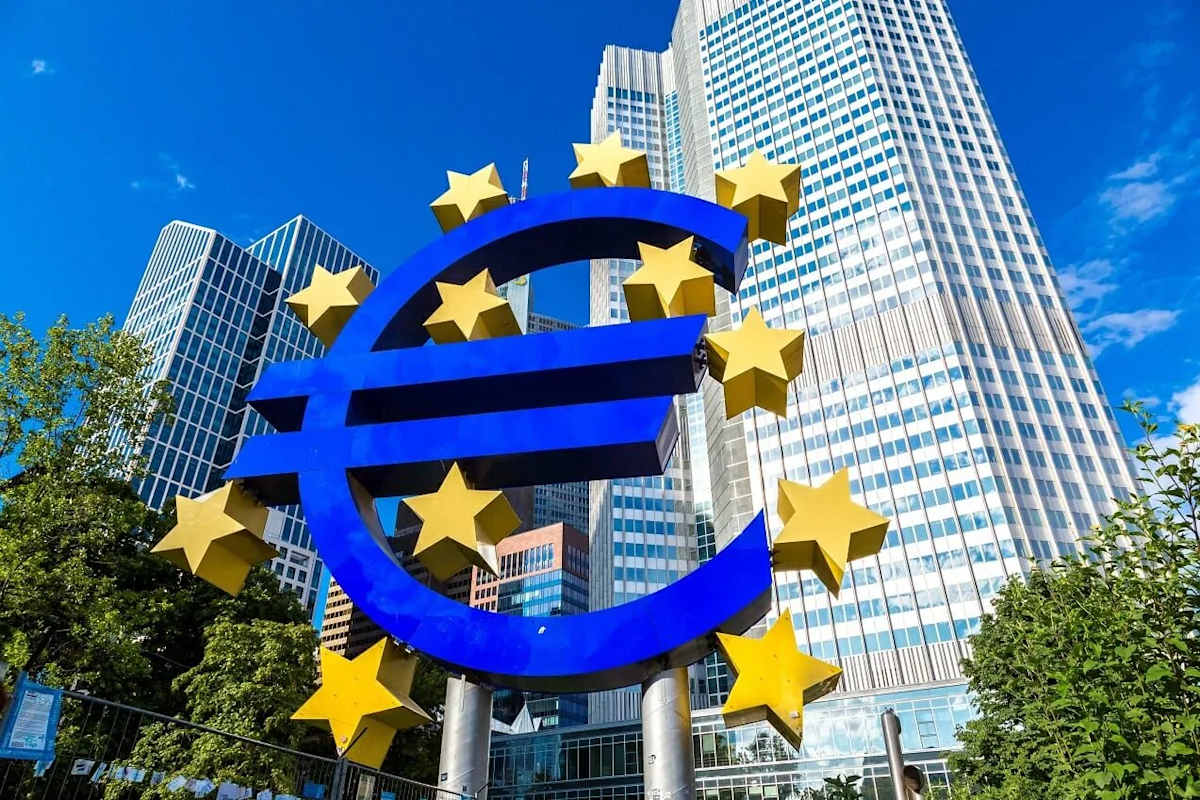
The European Union has progressed in its efforts to introduce a digital euro by 2029, following the endorsement of the proposal by a significant parliamentary committee.
The European Parliament's Committee on Economic and Monetary Affairs [1] has approved the proposed draft rules with a vote tally of 43 in favour , 14 against, and one abstention. The Europe of Sovereign Nations political group opposed the proposal, indicating that a subsequent vote may be required at the parliament's plenary session. Nonetheless, final approval could be achieved by the end of this year, [2] setting the stage for testing in 2027 ahead of a full launch in 2029.
The introduction of the digital euro by [3] the European Central Bank is framed as a “secure and convenient” payment solution for users, both online and offline. However, the reality presents a concerning outlook. While payment service providers, including banks and crypto-asset platforms, are positioned to distribute the digital euro, the mandate requiring businesses to accept it raises questions about its practicality and the implications for those unwilling or unable to adapt to yet another forced change.
Furthermore, the capping of individual holdings, alongside a stipulation that businesses can only hold digital euros temporarily for incoming payments, restricts economic freedom and raises concerns about liquidity. With no interest accruing on these funds, the attractiveness of the digital euro diminishes further. Additionally, the parliamentary committee's approval of measures enabling banks from non-euro EU countries to distribute the digital euro only complicates an already challenging landscape. Meanwhile, the requirement for euro area countries to ensure cash accessibility and prepare for potential digital payment failures underscores the fragility of this transition. The promise of a digital euro comes wrapped in layers of uncertainty and restrictions that may ultimately diminish its intended benefits.
The digital euro continues to face significant delays, [4] largely driven by suspicions from Eurosceptic groups that it undermines citizens' privacy and poses a risk of replacing cash altogether. Additionally, ongoing technical debates about the necessity for both ‘online’ and ‘offline’ versions only serve to further complicate an already stalled initiative. Navarrete Roja, [5] a Spanish Member of European Parliament said, “We strengthen access to and acceptance of cash while making central bank money available in digital form, the digital euro will complement cash, not replace it.” Peter Norwood, [6] a senior research and advocacy officer at Finance Watch also said [7] in a press release, “Parliament has found a majority for a digital euro that is more than another payment app. The text keeps the original ambition of the project alive ensuring inclusive access to public money in an increasingly digital payments landscape, all while protecting European sovereignty.”
However skepticism remains, In 2025 French MPs proposed [8] a bill to establish a national bitcoin reserve while formally opposing the European Central Bank's digital euro. The legislation articulates concerns regarding the potential risks of a centralized digital currency, asserting that it threatens privacy and economic freedom. Lawmakers have drawn parallels between the digital euro and China's digital yuan, warning that such a system could enable authorities to freeze citizens' funds and disrupt the banking system.
Dr. Patrick Schueffel who is [9] a professor at Fribourg’s School of Management has warned of [10] significant risks linked to CBDCs, cautioning that the digital euro may facilitate financial surveillance and control. They outline potential long-term implications, including issues of surveillance, censorship, financial oversight, and the potential misuse of data. “With a CBDC infrastructure such as the one underpinning the digital euro, a technology will be rolled out that can be abused for surveillance and control like no other in human history. Not only will it be registered on an eternal digital ledger which purchases you made from cradle to death bed, but any payment can also be censored on a keystroke,” said Schueffel.
Schueffel questions the assertion that a digital euro would positively impact the economy and society. Proponents argue that it would enable the European Central Bank to directly manage the money supply, improve control over interest rates, and bolster financial stability, all while advancing the goal of “banking the unbanked and underbanked.” However, Schueffel cautions that this perspective may be overly optimistic, warning of the potential risks associated with increased centralization. “Think it through if you advocate introducing CBDCs for these reasons, you also need to support loans directly granted by the ECB, as such central bank lending would support all of those causes.”
A public consultation released in 2021 regarding [11] the digital euro revealed that 43% of respondents favor a version that emphasizes privacy and data protection. The motivations behind this preference are diverse. Some participants believe in the inherent value of privacy, while others express concerns that the digital currency may lead to price discrimination or surveillance issues. Critics argue that the potential misuse of sensitive transaction data linked to the digital currency could adversely impact personal freedom and public life. The European Central Bank started exploring [12] the creation of a digital euro in 2019 claiming it would incorporate certain elements of anonymity. This would involve the use of anonymity vouchers, enabling users to make anonymous transfers of a limited amount of digital euros within a specific timeframe. However, this approach would permit anonymity only for smaller transactions.