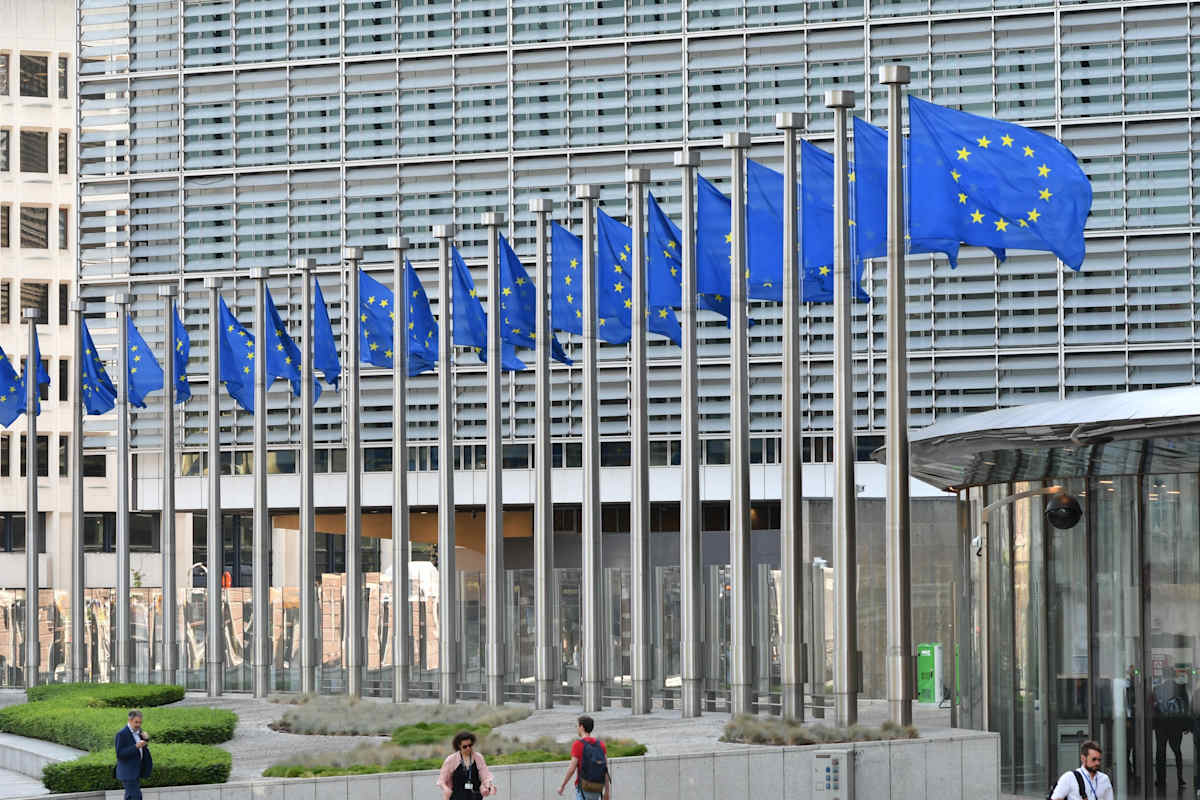
A 2026 report analyses how European Union funding and the export of high-risk artificial intelligence systems has contributed to increasing human rights violations in Palestine and the surrounding region.
The Arab Centre for the Advancement of Social Media has published [1] a report titled How EU Funding and Exports of High-risk AI Systems Exacerbate Severe Human Rights Violations in Palestine and the Broader Region. This report offers a detailed examination of the ways in which European policies facilitate the financing and export of advanced digital technologies that are employed in surveillance, control, and repression, particularly within the occupied Palestinian territory and other nations in the Middle East and North Africa. The report identifies three primary pathways through which advanced technologies reach the region. The first pathway involves European Union-funded migration management programmes utilising sophisticated surveillance technologies, including biometric identification systems and risk-analysis tools. The second pathway includes financial and research support directed toward Israeli weapons and technology companies that develop AI-based tools for military operations and surveillance systems.
EU funding and the exportation of high-risk AI systems have raised concerns regarding their potential impact on human rights, especially for vulnerable populations. This includes individuals displaced by conflict, such as Palestinians living under prolonged military occupation, as well as civil society members, including dissidents, activists, journalists, and protesters. The deployment of high-risk AI technologies like facial recognition, predictive policing, and emotion recognition may worsen the already challenging conditions faced by asylum seekers and migrants as they attempt to navigate their way to Europe. Investigations have [2] indicated that security forces in countries receiving EU funding in North Africa have been implicated in serious human rights abuses against migrants, which encompass serious mistreatment, including beatings, sexual violence, torture, and forced relocation. Moreover, the automated monitoring raises significant concerns regarding violations of Palestinians' rights to privacy, non-discrimination, and the freedoms of movement, organisation, protest, and assembly, while Israeli settlers experience unrestricted mobility.
Technologies from European companies have been identified in use by Israel against Palestinians, including surveillance cameras provided [3] by the Netherlands-based TKH Group in occupied East Jerusalem. These cameras are reportedly integrated into the Mabat 2000 networked facial recognition system, which, according to Amnesty International's 2023 [4] report titled Automated Apartheid, has granted Israeli authorities considerable control and surveillance over the lives of Palestinians in East Jerusalem, leading to arbitrary restrictions on their freedoms of movement, expression, association, and peaceful assembly. EU funding and exports of AI and surveillance technologies [5] present significant risks to Palestinians living under Israeli military occupation and a system described as apartheid. This situation involves land confiscation, illegal settlement, dispossession, and widespread institutional discrimination. Technology, including AI systems, plays a crucial role in the mechanisms of the Israeli occupation and its apartheid framework.
Palestinians [6] face AI-driven surveillance systems integrated within a broader framework of digital control, permitting Israeli authorities to monitor and track their movements, which impacts their freedom of movement, daily life, and access to essential services. Matt Mahmoudi who [7] is a Researcher AI and Human Rights at Amnesty International said, “Investors provide the enabling conditions and resources for entities like TKH Security, a part of TKH Group, to develop and sell surveillance technologies. Their vigilance is important especially where the risk of human rights harms is heightened. This is particularly urgent in the wake of Israel’s escalating surveillance-enabled crackdown on freedom of movement and freedom of association and peaceful assembly. Supplying hardware or software that can be used to reinforce apartheid, which is a crime against humanity, and other human rights violations by Israel against Palestinians must not be tolerated under any circumstance.”
The report also highlights that some of these technologies were either developed or funded through European research and innovation programmes or defence and investment funding mechanisms. The report cautions that ongoing funding and export of these systems, in the absence of transparency, independent oversight, and adequate human rights due diligence, may enhance the surveillance and repression capabilities of governments and military entities. Additionally, it poses escalating risks for journalists, activists, and human rights defenders due to increased scrutiny and targeting. Moreover, the report points [8] out legal gaps allowing European companies to export technologies categorised as high-risk or even prohibited within the EU to nations beyond its borders, without sufficient protections to avert human rights violations.
AI surveillance systems have the capability to track and monitor individuals, potentially restricting their freedom of movement and hindering their ability to escape violence and unsafe conditions. This can leave migrants stranded in transit countries, where they face the risk of human rights violations from local authorities or may be compelled to return to their countries of origin, where they could encounter conflict or persecution. Additionally, some may resort to taking alternative, less safe routes toward Europe. European borders [9] are increasingly perceived as areas of disorder that fail to effectively serve their intended functions. Citizens in countries that receive migrants often experience a frustrating sense of diminished control and a persistent state of border-related crises. For migrants and their families, this disorder translates to heightened vulnerability, risks to life, significant suffering, and increased financial burdens. Meanwhile, both legal and illegal sectors of the migration industry view this chaos as a lucrative opportunity, which they show little inclination to relinquish.
The increasing reliance [10] on commercial spyware and various forms of surveillance technology by governments represents a substantial threat to human rights globally. Law enforcement and intelligence agencies in numerous nations employ these technologies to target activists, journalists, humanitarians, academics, and other dissenting voices, which undermines democratic institutions, constricts civic spaces, and infringes on the privacy and rights of individuals, often jeopardising their physical safety. The European Union, which houses many of the companies that develop and export these technologies worldwide, is implicated in this issue. Although there is a regulatory framework intended to curb abuses, the EU is currently insufficiently addressing the sales and transfers from its member states to governments known for employing such technologies to suppress dissent and commit serious rights violations.
Repressive regimes that acquire high-risk AI systems with the backing of EU funds are likely to use these technologies to monitor and target individuals they perceive as threats to their authority, including journalists, human rights defenders, and political opponents. In the MENA region, [11] surveillance in public and digital spaces is common, often lacking adequate safeguards for privacy and personal information. Dissidents, journalists, human rights defenders, protesters, and activists frequently fall under state surveillance. Governments are increasingly implementing more invasive technologies. The ongoing [12] allocation of EU funds and technologies, coupled with insufficient oversight and protective measures, enhances the surveillance abilities of authoritarian regimes. This situation raises concerns about the impact on fundamental rights and freedoms, notably the right to privacy, freedom of peaceful assembly, freedom of association, press freedom, and the freedom of expression and information.
Amid the ongoing conflict in Gaza, several Members of the European Parliament [13] have sought to examine European Union funding directed towards Israeli companies, but their efforts have not yielded results. MEPs from the Left group have consistently posed enquiries regarding [14] the European Defence Fund financing provided to the state-owned Israeli Aerospace Industries through its Greek subsidiary Intracom. They have raised concerns about the safeguards in place to prevent a non-EU parent company from accessing sensitive information and to ensure that project outcomes remain confined to the EU entity, as well as the frequency and methods employed by the European Commission to audit Intracom Defence.
- https://7amleh.org/storage/posts/pdf/e028fb57-2dad-4a05-992d-3e823bba52ca.pdf
- https://www.theguardian.com/global-development/2025/jan/24/eu-human-rights-tunisia-migrant-security-forces-migration
- https://www.amnesty.org.uk/latest/israel-opt-dutch-investment-group-pushes-human-rights-safeguards-surveillance-tech/
- https://www.amnesty.org/en/documents/mde15/6701/2023/en/
- https://www.amnesty.org/en/projects/israels-occupation-of-palestinian-territory/
- https://www.amnesty.org/en/latest/news/2024/07/israel-opt-dutch-investor-pushes-for-human-rights-safeguards-to-stop-use-of-surveillance-technology-against-palestinians/
- https://www.foxglove.org.uk/who-we-are/people/matt-mahmoudi-advisory-council/
- https://cdt.org/wp-content/uploads/2025/12/CDT-Europe-Report-on-the-Dual-Use-Regulation-1.pdf
- https://porcausa.org/wp-content/uploads/2024/05/InformeExternaliz_ENG-COMPL.pdf
- https://www.hrw.org/report/2026/05/12/looking-the-other-way/eu-failure-to-prevent-surveillance-exports-to-rights
- https://pomeps.org/transnational-digital-repression-in-the-mena-region
- https://issafrica.org/iss-today/migrants-at-the-mercy-of-moroccos-iron-fist
- https://www.europarl.europa.eu/doceo/document/E-10-2025-003822_EN.html
- https://www.investigate-europe.eu/posts/european-defence-fund-millions-benefiting-israeli-state-owned-drone-manufacturer