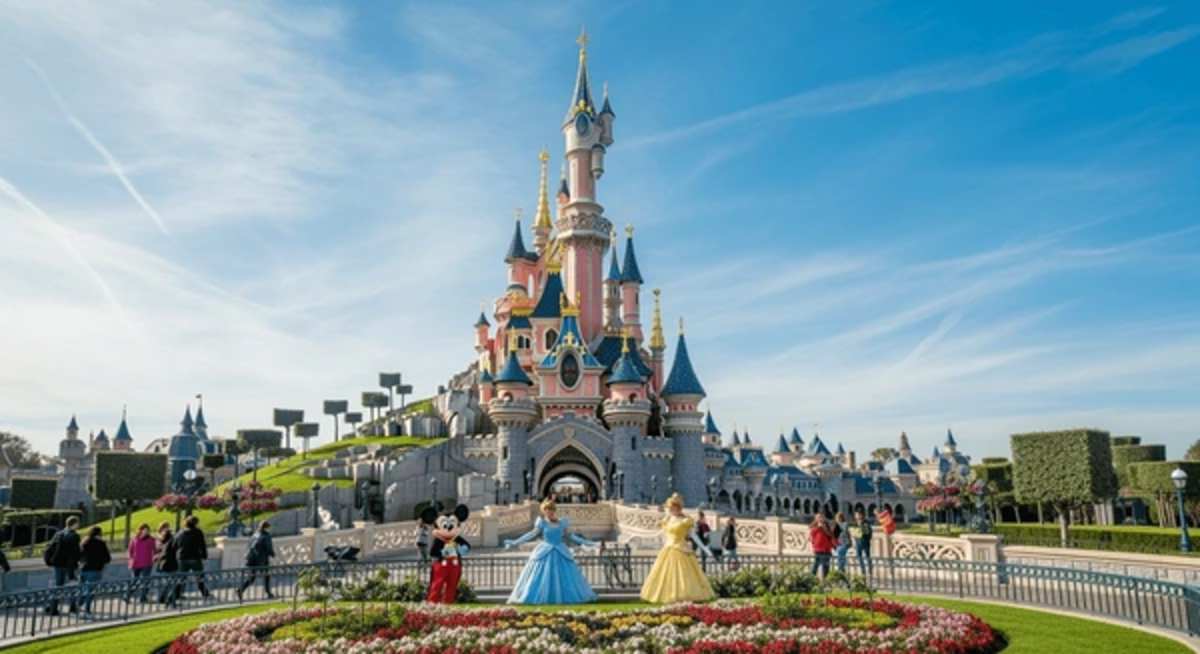
The Walt Disney Company has officially implemented facial recognition technology at the Disneyland Resort in Anaheim, advancing from a phase of limited testing to full operational deployment at both Disneyland Park and Disney California Adventure.
Disneyland has [1] implemented facial recognition technology at its park entrances to facilitate ticket verification, a trend that is being adopted by various major entertainment venues. The system scans guests' faces, converts the data into numerical identifiers, and matches it with existing ticket information. The Walt Disney Company said on it official website. “We have implemented technical, administrative and physical security measures that are designed to protect guest information from unauthorized access, disclosure, use and modification. From time to time, we review our security procedures to consider new technology and methods, as appropriate.”
Although the use of this technology is described as optional, the structure of the system effectively makes participation the norm. The majority of entry lanes utilize facial recognition, while manual ticket verification is often slower and less user-friendly. Privacy experts have [2] warned that the technology normalizes surveillance practices and presents potential security risks. Ari Waldman, who is [3] a professor of law at UC Irvine said, “The normalization of facial surveillance is really problematic. We can’t go around life hiding our faces, so this isn’t just next step in surveillance; it’s qualitatively different. In a world of facial recognition, when people leave their house, it automatically means they’re identified.”
The Electronic Frontier Foundation, [4] a organization opposing the federal government's use of facial recognition data, has called for the enhancement of laws aimed at protecting consumers when this technology is employed by private businesses. Adam Schwartz, who is [5] a privacy litigation director at the Electronic Frontier Foundation said “If you collect this type of data you have put a target on your back for people to steal it.” Visitors navigating busy entry points typically have limited time and information to provide meaningful consent, with many unaware that opting out is an available option. Consequently, the concept of “consent” may be influenced by the inconvenience of alternate entry methods.
Families may feel implicit pressure to provide biometric data for minors without sufficient disclosure regarding the storage and potential future use of that data. Unlike traditional forms of identification, biometric identifiers are immutable, meaning that once shared, they cannot be reset or changed. The decision to use this technology, which is made quickly at the entrance to the theme park, could have significant implications for individuals over the long term.
At Intuit Dome, attendees have [6] the option to utilize GameFaceID for expedited entry to Clippers games and other live events. To participate, guests are required to upload a selfie, enabling the technology to create facial recognition data for identification at the venue. “GameFace ID allows you to Zoom Thru the entrance so you can leave your phone in your pocket and just walk right on in. To set your GameFace ID, follow the steps during the profile completion process, take a selfie when prompted and save it. It’s that easy,” said the Intuit Dome on its Know Before You Go Page. Individuals without a GameFace ID will need to use their Intuit Dome Identity Pass for access to the venue. To utilize the Identity Pass, users must have their phone ready and their Identity Pass prepared for tapping at the entrance. After finalizing their profile, users are required to add the Identity Pass to their digital Wallet.
The Disneyland deployment is a component of a larger historical context. In the wake of the September 11, 2001 attacks, [7] the USA PATRIOT Act was enacted during George W. Bush's presidency, significantly [8] increasing the authority of intelligence and law enforcement agencies. Large-scale data collection, previously regarded as exceptional, became a standardized practice. The American Civil Liberties Union expressed concerns that the definition is overly broad, potentially encompassing political dissent from activists participating in protests related to global trade, environmental policies, and other matters. The definition may also be sufficiently expansive to include labour strikes and various forms of working-class struggle.